

What is On-Page SEO?
On-Page SEO refers to the set of actions that are performed within the pages of a website to make that page more optimized for search engines and users. This type of SEO includes optimizing content, HTML codes, site structure, and user experience.
When you adjust the title, text, images, and internal links of a page on your site with the goal of ranking better in Google, you are performing on-page SEO.
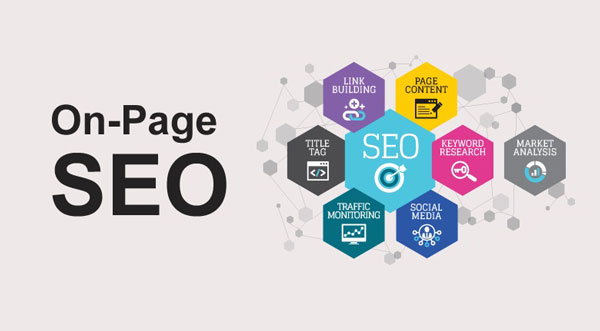
What is the difference between on-page SEO and off-page SEO?
| Feature | On-Page SEO | (Off Page SEO) |
| Execution Location | Inside the site pages | Off-site (e.g., link building) |
| Control Level | Fully under your control | More dependent on others |
| Items included | Content, Keywords, HTML Structure, UX | Backlinks, Social Signals, Press Releases |
| Goal | Optimization of content and structure | Increasing site authority and reputation |
Simply put, on-page SEO is the foundation of your SEO success, and without it, off-page SEO will not be fully effective.
Important factors in on-page SEO
Smart keywordsIt is important to use keywords naturally and purposefully in sensitive areas of the page, such as the title, meta description, heading tags, the first paragraph of content, URL, and even in image alt text. Choosing the right keywords based on user searches and actual search volume helps Google better understand the topic of your page. However, you should not repeat keywords too much, as this will reduce the quality of the content and
The page title should be short, catchy, and include the main keyword. This title is the first thing users see in search results and should motivate them to click. The meta description should also be concise and compelling, and written in a way that makes the user feel that the content of the page exactly meets their needs. Using strong words and calls to action in the meta description increases the click-through rate (CTR) of the page.
lead to Google penalties.
Logical content structure with heading tags (H1, H2, H3, etc.)
Dividing your content with headings makes it easier for search engines and users to identify and understand different sections of your content. For example, the H1 tag is usually the main title of the page and should only be used once, followed by H2 and H3 for subheadings. This structure not only helps with readability, but it also
Image optimization
tells Google which sections you think are most important.
Images add a lot of data to the page and if not optimized, slow down loading speed, which is a negative factor for SEO. It is important to use compressed formats like WebP, reduce image size without losing quality, and set image dimensions correctly. In addition, writing accurate Alt Text helps search engines understand what the image is about and your images will appear in Google Image Search.
Placing relevant links between different pages on your site makes it easier for Google’s crawlers to index the pages and the value of the page is transferred to different parts of the site through links. It also improves the
The speed of the site should be high, because users leave slow sites and Google considers this as a negative factor. Responsive design means that your site is displayed well on mobile phones, tablets and desktops. Readable fonts, appropriate color schemes, proper spacing between elements and a simple structure make it easy for the user to follow the content and enjoy
the site.
Optimized URL
user experience because it directs the visitor to related pages and increases the time spent on the site.
URLs should be short, clear, and contain the page’s main keyword. Using long, complex URLs that contain meaningless letters and numbers is both confusing to users and less understandable to search engines. Readable URLs help users understand what the page is about and increase the likelihood of it being shared.
Characteristics of good SEO content
SEO-friendly content should be both useful and engaging for the user, and understandable and structured for the search engine. Its key features include:
✅ 1. Target a specific keyword
Each piece of content should focus on a main topic and keyword so that Google can better understand the topic of the page.
✅ 2. Fully responsive to user needs
The content should be comprehensive and useful, not just full of keywords. The user should find the answer to their question on the same page.
✅ 3. Proper structure
Including using the main heading (H1), subheadings (H2, H3), proper paragraphing, and bulleted lists.
✅ 4. Visual appeal
Use images, videos, quotes, tables, and graphic elements to keep the user’s attention.
✅ 5. High readability
The appropriate font, standard line spacing, and simple language ensure that the user does not get bored reading.
✅ 6. Call to Action (CTA)
The content should invite the user to take a specific action, such as signing up, making a purchase, reading a related article, or contacting you.
سئو داخلی دقیقا چه تفاوتی با سئو خارجی دارد؟
سئو داخلی شامل بهینهسازی محتوای صفحات، ساختار سایت و تجربه کاربری داخل سایت است، اما سئو خارجی به فعالیتهایی خارج از سایت مثل لینکسازی و شبکههای اجتماعی گفته میشود.
نقش تصاویر در سئو داخلی چیست؟
تصاویر به جذابیت محتوا کمک میکنند و با بهینهسازی حجم و متن جایگزین (alt) به افزایش سرعت سایت و درک بهتر موضوع توسط موتورهای جستجو کمک میکنند.